
How Bulk Purchasing Saves Money: Complete B2B Guide 2024
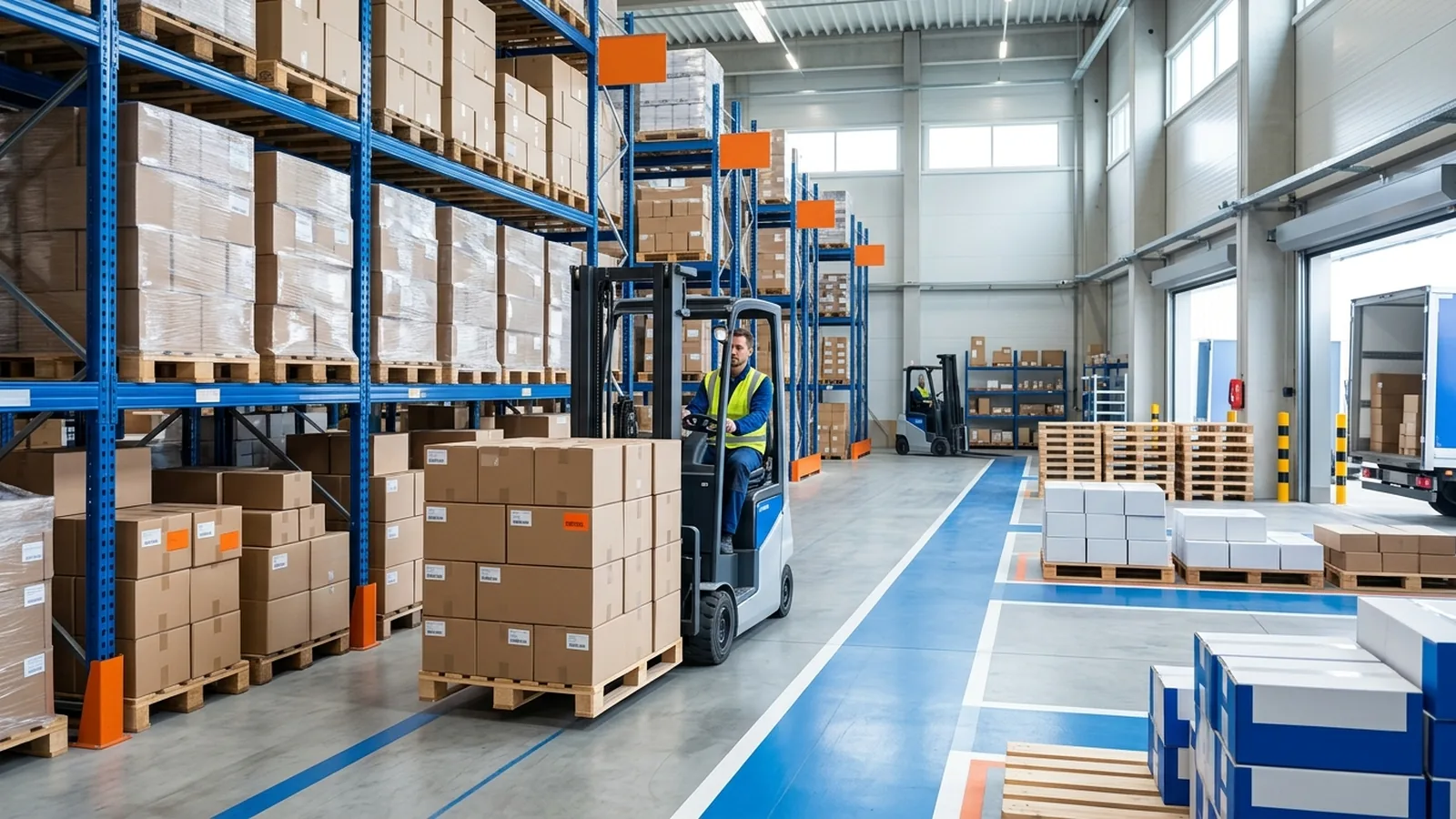
In today's competitive retail landscape, profit margins are under constant pressure. Indian businesses—from neighborhood kirana stores to growing e-commerce ventures—are continuously searching for strategies to reduce costs without compromising quality. Among the most effective yet underutilized approaches is bulk purchasing, a procurement method that transforms how businesses acquire inventory and manage expenses.
Bulk purchasing saves money through multiple interconnected mechanisms that extend far beyond simple volume discounts. When executed strategically, wholesale procurement reduces per-unit costs, minimizes operational expenses, strengthens supplier relationships, and creates sustainable competitive advantages. For retailers, distributors, and resellers operating in India's price-sensitive markets, understanding and implementing bulk buying strategies can mean the difference between struggling for survival and achieving healthy profitability.
This comprehensive guide explores exactly how bulk purchasing delivers measurable financial benefits, reveals hidden savings opportunities many businesses overlook, and provides actionable frameworks for maximizing your return on wholesale investment. Whether you're a small business owner placing your first large order or a procurement manager optimizing an established supply chain, these insights will help you leverage bulk purchasing to strengthen your bottom line.
Understanding Bulk Purchasing Economics
Bulk purchasing, also known as wholesale buying or volume procurement, involves acquiring products in larger quantities than immediate needs dictate. This approach fundamentally alters the economics of product acquisition by tapping into principles of economies of scale—a concept where per-unit costs decrease as purchase volumes increase.
The financial logic behind bulk purchasing is straightforward: suppliers and manufacturers face fixed costs in production, storage, marketing, and distribution. When a buyer commits to larger order quantities, suppliers can distribute these fixed costs across more units, creating room for discounted pricing while maintaining their profit margins. Additionally, larger orders reduce the supplier's customer acquisition costs, administrative overhead, and logistics complexity—savings they're often willing to share with volume buyers.
For Indian businesses, this economic principle translates into tangible benefits across multiple touchpoints. A retailer purchasing 1,000 units instead of 100 might receive 25-35% lower per-unit pricing. A distributor consolidating orders gains negotiating leverage. A reseller accessing wholesale inventory through B2B platforms can compete effectively against larger competitors despite limited capital.
The Cost Structure Breakdown
Understanding how costs accumulate in traditional purchasing versus bulk procurement helps quantify potential savings:
- Product base cost: The manufacturer's or supplier's list price, which decreases with volume commitments
- Transaction costs: Administrative expenses for processing orders, invoicing, and payment—spread across fewer transactions in bulk buying
- Logistics expenses: Shipping, handling, and freight costs that benefit from consolidation
- Quality assurance: Inspection and verification processes become more efficient per unit
- Storage and handling: Warehousing costs that can be optimized through strategic inventory management
Each of these cost components responds differently to volume purchasing, creating a compounding effect that amplifies overall savings. Businesses that analyze their complete cost structure—not just unit price—discover the true power of bulk procurement strategies.
Direct Cost Savings Through Volume Discounts
Volume discounts represent the most visible and immediate benefit of bulk purchasing. Suppliers structure their pricing in tiers, offering progressively lower rates as order quantities increase. These tiered discounts typically follow predictable patterns across different product categories and industries.
In the Indian wholesale market, standard volume discount structures might look like this:
| Order Quantity | Discount Level | Typical Savings | Best For |
|---|---|---|---|
| 10-50 units | Minimal/None | 0-5% | Trial orders, testing |
| 51-200 units | Small volume | 8-15% | Small retailers, startups |
| 201-500 units | Medium volume | 15-25% | Established stores, online sellers |
| 501-1,000 units | Large volume | 25-35% | Distributors, chain retailers |
| 1,000+ units | Bulk/Wholesale | 35-50% | Major distributors, exporters |
These percentages vary considerably based on product margins, market competition, and supplier relationships. Electronics and branded goods typically offer tighter discount ranges (10-25%), while generic consumer products, textiles, and commodity items may provide more aggressive volume pricing (30-60% off retail).
Real-World Savings Examples
Consider a Mumbai-based electronics retailer comparing purchasing options for a popular smartphone accessory:
- Retail purchase: ₹500 per unit × 50 units = ₹25,000 total
- Small bulk purchase: ₹425 per unit × 200 units = ₹85,000 (15% discount)
- Large bulk purchase: ₹350 per unit × 500 units = ₹1,75,000 (30% discount)
The per-unit savings of ₹150 (30%) might seem modest, but when multiplied across thousands of transactions annually, these margins determine business viability. If the retailer sells 500 units monthly at ₹699, the bulk purchasing strategy increases gross profit from ₹99,500 to ₹1,74,500 per month—a ₹75,000 improvement that directly impacts profitability.
For businesses exploring liquidation lots and surplus inventory, the savings can be even more dramatic, with discounts reaching 60-80% off original wholesale prices. These opportunities require flexibility in product selection but deliver exceptional value for price-sensitive market segments.
Hidden Savings Beyond Unit Price
While volume discounts capture attention, sophisticated buyers recognize that bulk purchasing saves money through numerous indirect mechanisms that often exceed the value of price reductions alone. These hidden savings accumulate across the procurement cycle, creating sustainable competitive advantages.
Freight and Shipping Consolidation
Transportation costs follow economies of scale even more dramatically than product pricing. Shipping 500 units typically costs far less than ten times the cost of shipping 50 units. Full truckload (FTL) rates per unit are 40-60% lower than less-than-truckload (LTL) shipments. Container shipping follows similar economics—a business importing 1,000 units pays roughly the same freight as importing 200 units when utilizing full container loads.
For Indian businesses purchasing domestically, consolidated shipments reduce per-unit freight from ₹50-80 to ₹15-25, a saving that compounds across every product line. When sourcing through B2B platforms that offer streamlined procurement processes, these logistics advantages become even more pronounced.
Reduced Transaction and Administrative Costs
Every purchase order generates administrative work—vendor communications, invoice processing, payment reconciliation, and record-keeping. These transaction costs remain relatively fixed whether ordering 50 or 500 units. By consolidating purchases, businesses reduce:
- Staff time spent on procurement activities (30-50% reduction)
- Payment processing fees and banking charges
- Communication overhead and coordination complexity
- Accounting and bookkeeping workload
- Vendor management complexity
A procurement team spending 15 hours weekly on small-order processing might reduce this to 5-7 hours through bulk purchasing, freeing resources for strategic activities that drive growth.
Quality Consistency and Reduced Returns
Bulk orders from single production batches ensure consistency in quality, color, specifications, and packaging—critical for customer satisfaction and brand reputation. This consistency reduces return rates, customer complaints, and the associated costs of managing product issues. Lower return rates directly improve net profit margins by 2-5% for most retail categories.
Inventory Buffers Against Price Volatility
Bulk purchasing creates inventory buffers that protect against price increases, currency fluctuations, and supply disruptions. When commodity prices rise or suppliers increase rates, businesses with bulk-purchased inventory maintain their cost basis, preserving margins that competitors sacrifice. This hedging benefit proves particularly valuable during inflationary periods or supply chain disruptions.
Operational Efficiency Gains
Beyond direct cost reductions, bulk purchasing transforms operational workflows in ways that improve productivity, reduce errors, and enable business scaling. These efficiency gains compound over time, creating organizational capabilities that differentiate successful businesses from struggling competitors.
Streamlined Receiving and Warehousing
Receiving ten shipments of 50 units requires ten separate inspection cycles, documentation processes, and storage operations. Receiving one shipment of 500 units reduces this workload by 70-80%. Warehouse operations become more efficient with standardized storage locations, reduced picking complexity, and improved inventory tracking accuracy.
Stronger Supplier Relationships
Volume buyers gain priority status with suppliers, accessing benefits beyond pricing:
- Preferential allocation during product shortages
- Early access to new product launches
- Customization and private label opportunities
- Extended payment terms (30-60 days instead of advance payment)
- Dedicated account management and support
- Flexibility in order modifications and returns
These relationship benefits translate into competitive advantages that pure price comparison cannot capture. A retailer with preferential supplier status maintains inventory during peak seasons when competitors face stockouts, capturing incremental sales that justify bulk purchasing strategies.
Improved Cash Flow Predictability
While bulk purchasing requires larger upfront investment, it creates predictable cash flow patterns that simplify financial planning. Businesses understand their cost basis for extended periods, can confidently price products, and avoid the constant firefighting of frequent reordering. This predictability enables better working capital management and strategic growth planning.
Calculating Your Bulk Purchasing ROI
Smart businesses quantify bulk purchasing benefits before committing capital. A systematic ROI calculation framework helps identify which products, quantities, and suppliers deliver optimal returns. Here's a practical approach to evaluating bulk purchasing opportunities:
The Complete ROI Formula
Total Savings = (Unit Price Savings × Quantity) + Freight Savings + Transaction Cost Reduction + Time Savings Value - (Additional Carrying Costs + Risk Costs)
Let's apply this to a realistic scenario for a Delhi-based home goods retailer considering a bulk purchase:
Scenario: Purchasing kitchen storage containers
- Regular purchase: ₹80 per unit, 100 units monthly, ₹50 shipping per order
- Bulk purchase option: ₹55 per unit, 1,200 units (12 months supply), ₹300 total shipping
- Additional carrying cost: ₹2 per unit per year for warehousing and insurance
- Transaction time savings: 10 hours annually (valued at ₹500/hour)
Calculation:
- Unit price savings: (₹80 - ₹55) × 1,200 = ₹30,000
- Freight savings: (₹50 × 12) - ₹300 = ₹300
- Transaction cost reduction: 11 fewer orders × ₹200 = ₹2,200
- Time savings value: 10 hours × ₹500 = ₹5,000
- Carrying costs: 1,200 units × ₹2 = ₹2,400
- Net annual savings: ₹35,100
- ROI: 53% on the incremental investment
This framework reveals that the retailer gains ₹35,100 in annual value by committing an additional ₹36,000 in upfront inventory investment—a compelling return that most financial instruments cannot match.
Risk-Adjusted Evaluation
Conservative buyers should adjust ROI calculations for potential risks:
- Obsolescence risk: For trendy or seasonal products, reduce projected savings by 10-20%
- Demand uncertainty: If sales forecasts have ±30% variance, start with smaller bulk quantities
- Storage constraints: Factor in opportunity costs if warehouse space limits other inventory
- Cash flow impact: Calculate the opportunity cost of capital tied up in inventory
Products with stable demand, long shelf life, and proven sales history offer the safest bulk purchasing opportunities. Fast-moving consumer goods (FMCG), commodity items, and essential supplies typically justify aggressive bulk strategies, while fashion, electronics, and trend-dependent products require more conservative approaches.
Strategies to Maximize Bulk Buying Savings
Extracting maximum value from bulk purchasing requires strategic planning, disciplined execution, and continuous optimization. These proven strategies help businesses of all sizes enhance their wholesale procurement results:
Demand Forecasting and Data-Driven Ordering
Accurate demand forecasting prevents both understocking and overstocking—the twin dangers of bulk purchasing. Implement these practices:
- Analyze 12-24 months of historical sales data to identify patterns
- Adjust for seasonality, trends, and market changes
- Start bulk purchasing with proven fast-movers before expanding to slower products
- Use inventory turnover ratios to optimize order quantities (aim for 6-12 turns annually)
- Test new products in small quantities before committing to bulk orders
Strategic Supplier Partnerships
Transform supplier relationships from transactional to strategic partnerships:
- Consolidate purchasing with fewer suppliers to increase volume leverage
- Negotiate annual contracts with volume commitments for best pricing
- Request vendor-managed inventory (VMI) arrangements for automatic replenishment
- Explore consignment models where suppliers retain ownership until products sell
- Build personal relationships with supplier decision-makers
Platforms like DealsGoKart's wholesale marketplace facilitate these relationships by connecting buyers with verified suppliers offering competitive bulk pricing across thousands of product categories.
Mixed-Product Optimization
Rather than bulk purchasing single SKUs, mix complementary products to reach volume thresholds while diversifying inventory risk:
- Combine slow-movers with fast-movers to achieve discount tiers
- Purchase product families or categories together
- Coordinate with other retailers for group buying (cooperative purchasing)
- Leverage supplier minimum order values (MOV) rather than per-product minimums
Storage and Handling Optimization
Maximize bulk purchasing benefits while minimizing carrying costs:
- Negotiate staggered delivery schedules to reduce warehouse requirements
- Use just-in-time delivery from supplier warehouses when possible
- Implement FIFO (first-in, first-out) inventory management
- Consider shared warehousing or third-party logistics (3PL) for overflow
- Optimize warehouse layout for efficient bulk storage and retrieval
Financial Structuring
Manage the working capital impact of bulk purchasing through smart financial strategies:
- Negotiate extended payment terms (60-90 days) to align with sales cycles
- Use trade credit facilities specifically designed for inventory financing
- Start with modest bulk increases (2-3x normal orders) before scaling
- Calculate economic order quantity (EOQ) to find the optimal purchase size
- Reserve bulk buying for products with fastest turnover to quickly recover capital
Common Mistakes to Avoid
Even experienced buyers fall into traps that undermine bulk purchasing benefits. Avoid these common pitfalls:
Overbuying Slow-Moving Inventory
The biggest mistake is purchasing excessive quantities of products with uncertain demand. A 30% discount means nothing if products sit unsold for 18 months, tying up capital and warehouse space. Always prioritize proven sellers for bulk orders, leaving slower products for smaller, more frequent purchases.
Ignoring Total Cost of Ownership
Focusing exclusively on unit price while overlooking freight, storage, insurance, handling, and opportunity costs creates false savings. Calculate the complete landed cost including all associated expenses before committing to bulk purchases. Sometimes a slightly higher unit price with better terms delivers superior total economics.
Inadequate Quality Verification
Ordering 1,000 units of a product you haven't physically inspected risks massive losses if quality doesn't meet expectations. Always order samples or small test quantities before committing to bulk orders, especially when working with new suppliers or exploring new product categories.
Poor Inventory Management
Bulk purchasing without proper inventory systems leads to stock confusion, storage inefficiencies, and unnoticed obsolescence. Implement basic inventory management software, conduct regular cycle counts, and maintain clear documentation of purchase dates, locations, and expected turnover.
Neglecting Supplier Diversification
Over-relying on single suppliers—even when offering excellent bulk pricing—creates vulnerability to supply disruptions, quality issues, or relationship problems. Maintain relationships with 2-3 suppliers per major category to ensure continuity and competitive pricing pressure.
Rigid Planning Without Market Responsiveness
Markets change, trends shift, and customer preferences evolve. Bulk purchasing strategies must include flexibility mechanisms—smaller order options, diverse product selection, and regular strategy reviews. Lock in bulk benefits without locking yourself into obsolete inventory.
The DealsGoKart Advantage for Bulk Buyers
Implementing effective bulk purchasing strategies requires access to reliable suppliers, diverse inventory options, and transparent pricing—exactly what DealsGoKart delivers to Indian businesses. As India's leading B2B marketplace for liquidation, wholesale, surplus, and overstock inventory, DealsGoKart removes traditional barriers that prevent small and medium businesses from accessing bulk purchasing benefits.
Why DealsGoKart Enhances Bulk Buying Success
DealsGoKart's platform addresses the key challenges bulk buyers face:
- Lower entry thresholds: Access wholesale and bulk pricing without massive minimum orders that strain working capital
- Verified supplier network: Transact confidently with pre-screened, reliable suppliers across India
- Diverse inventory categories: From electronics and apparel to home goods and industrial supplies—thousands of bulk purchasing opportunities
- Transparent pricing: Clear, upfront pricing information enables accurate ROI calculations
- Liquidation and surplus deals: Access exceptional bulk discounts on overstock, closeout, and liquidation inventory
- Simplified procurement: Streamlined ordering, payment, and logistics coordination
Whether you're a small retailer looking to place your first bulk order or an established distributor optimizing supply chains, DealsGoKart provides the infrastructure, inventory access, and supplier relationships that transform bulk purchasing from risky gamble to strategic advantage.
Getting Started with Strategic Bulk Purchasing
Begin your bulk purchasing journey with these practical first steps:
- Analyze your current best-selling products and identify 5-10 items with consistent demand
- Calculate your current total cost per unit including all expenses
- Research bulk pricing options through DealsGoKart's supplier network
- Start with a modest bulk purchase (2-3x your normal order) to test logistics and demand
- Track results meticulously—actual savings, inventory turnover, and cash flow impact
- Scale successful products while refining your approach based on real performance data
- Expand bulk purchasing gradually to additional categories as confidence and capital permit
The journey to procurement excellence starts with a single strategic bulk purchase. Each successful order builds knowledge, confidence, and supplier relationships that compound over time, creating sustainable competitive advantages that pure retail models cannot match.
Conclusion: Turning Bulk Purchasing Into Competitive Advantage
Bulk purchasing saves money through a powerful combination of direct discounts, hidden operational efficiencies, and strategic advantages that extend far beyond simple unit cost reduction. For Indian businesses navigating competitive markets with tight margins, mastering wholesale procurement strategies represents one of the most accessible paths to improved profitability and sustainable growth.
The evidence is clear: businesses implementing strategic bulk purchasing consistently achieve 30-50% total cost reductions compared to small-order procurement approaches. These savings directly strengthen profit margins, enable competitive pricing, and free capital for growth investments. Combined with operational efficiency gains, stronger supplier relationships, and market resilience, bulk purchasing transforms from a tactical cost-cutting measure into a foundational strategic capability.
Success requires balancing ambition with discipline—pursuing aggressive savings while managing inventory risk, leveraging volume commitments while maintaining flexibility, and maximizing discounts while ensuring quality and reliability. The businesses that master this balance, supported by platforms like DealsGoKart that democratize access to wholesale opportunities, position themselves to thrive regardless of market conditions.
Ready to unlock substantial cost savings for your business? Explore DealsGoKart's extensive catalog of liquidation, wholesale, and surplus inventory today and start building your competitive advantage through smart bulk purchasing. Whether you're buying your first wholesale lot or optimizing an established supply chain, DealsGoKart connects you with the suppliers, inventory, and pricing that turn bulk purchasing strategy into bottom-line results.
Frequently asked questions
Businesses typically save 15-40% on per-unit costs through bulk purchasing, depending on the product category and order volume. When factoring in reduced shipping, lower transaction costs, and operational efficiencies, total savings often reach 30-50% compared to small-order purchasing. The exact savings vary by industry, supplier relationships, and inventory management capabilities.
Ready to source smarter?
Ready to unlock substantial cost savings for your business? Explore DealsGoKart's extensive catalog of liquidation, wholesale, and surplus inventory today and start building your competitive advantage through smart bulk purchasing.